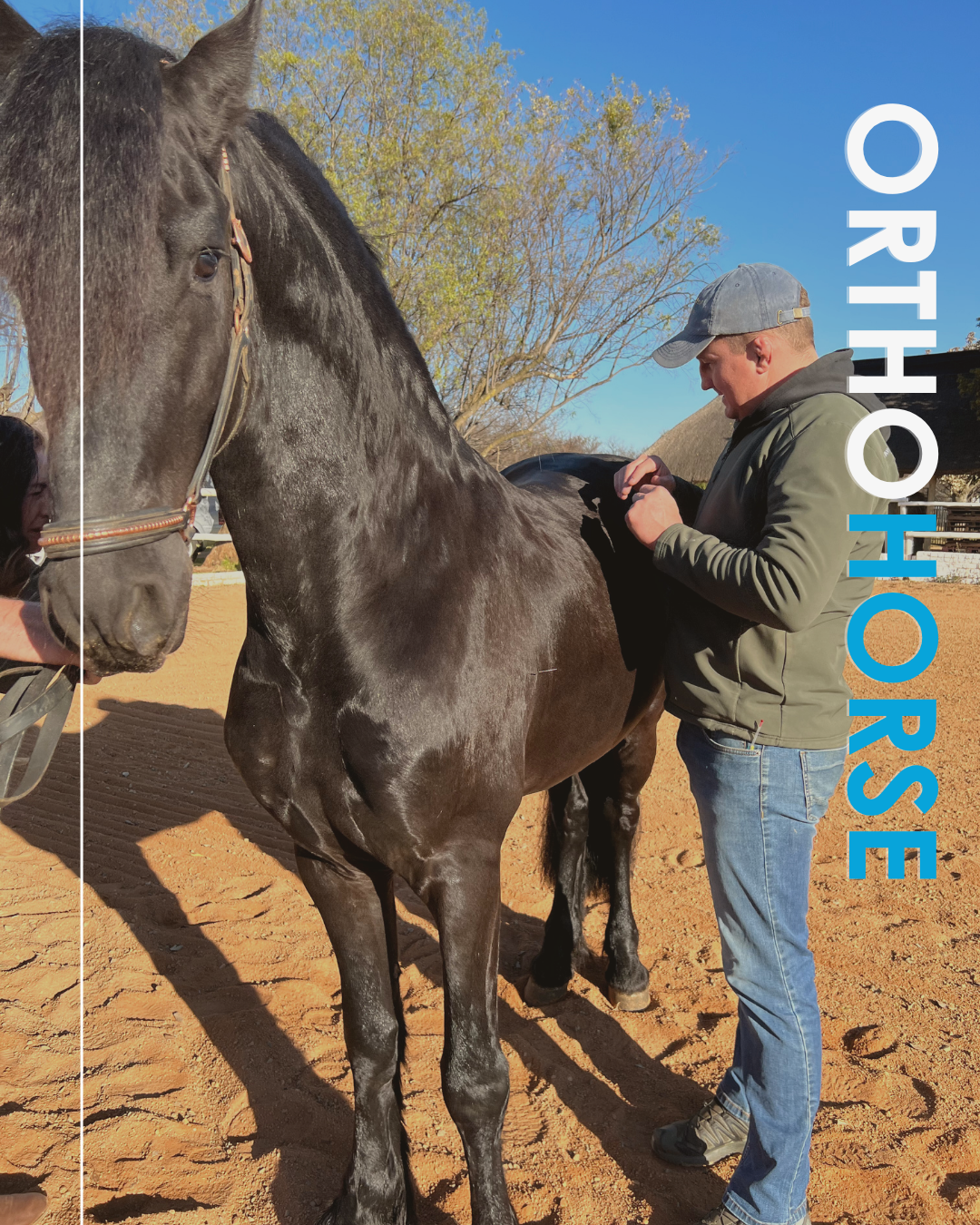
ORTHOhorse
Horses are powerful, athletic animals — but like humans, their bodies are constantly exposed to strain. Whether through training, competition, daily riding, or even time spent in the stable, these physical demands can affect their neuromusculoskeletal (NMSK) system — including their muscles, joints, nerves, and spine.
Injuries can happen suddenly, such as a fall or misstep, but more often, strain builds up over time. Factors like repetitive movement, riding posture, uneven terrain, ill-fitting tack, or natural ageing can all contribute to tension and imbalance within your horse’s body.
Over time, this can impact not only performance, but also comfort, movement, and overall wellbeing.
Signs Your Kids May Benefit from Chiropractic Care:
- Lameness or stiffness
- Changes in posture or movement
- Decreased performance or resistance during work
- Discomfort when being saddled
- Difficulty bending or moving evenly on both sides
- Reluctance to pick up or maintain a lead
- A hollow topline or lack of engagement
- Hesitation with normal activities (loading, jumping, picking up feet)
- Holding the tail abnormally or unusual head positioning
- Difficulty chewing or accepting the bit
- Uneven muscle development or muscle loss
- Imbalances through the pelvis
- Difficulty getting up or lying down
HOW CAN CHIROPRACTIC HELP?
Chiropractic care for horses focuses on relieving tension, improving mobility, and restoring balance within the body. By addressing the underlying cause of discomfort — not just the visible symptoms — we aim to support better movement, improved performance, and long-term soundness.
Chiropractic care isn’t only about treating injury — it’s also about prevention, helping your horse move freely, perform optimally, and feel their best.
Because when your horse moves well, they perform well.
WHEN SHOULD MY HORSE SEE A CHIROPRACTOR?
At ORTHOlifestyle we recommend regular checkup and treatment sessions for your horse. Your chiropractor will work out a treatment protocol relevant to your horse's needs.
WHAT CAN MY HORSE EXPECT FROM THEIR VISIT?
A typical visit includes the following:
- Medical history taking
- Assessment of the reflexes, limbs and spine
- Soft tissue therapy
- Adjustments or mobilisations of the spine and joints
- Activities to do at home
- Referral for diagnostic tests if need be
- Referral to another therapist or specialist if need be